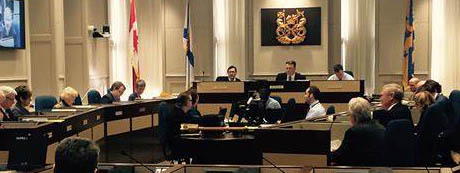
An indignant puff of huff hovers over Halifax Regional Council. Mayor Mike Savage says actions by the provincial government are dangerous and undemocratic. South-end councillor Waye Mason says the province is invading space that only the municipality can manage.
What’s causing this is indeed touchy. The province has disallowed a municipal bylaw that prohibits construction after seven o’clock at night in local neighbourhoods. Noise at night is the kind of thing urban voters complain about to their city councillors. The provincial government’s ear may not be tuned so finely. Conservatives hold only six of the twenty metro-area seats at Province House and the government is more concerned about the shortage of housing for a planned increase in population.
HRM Council claims the province’s intervention is unwarranted and unnecessary. The municipality has permits in place for almost 10,000 new units, well beyond the capacity of the existing construction industry. As for the future, it has removed restrictions on hi-rise development along major corridors across the peninsula.
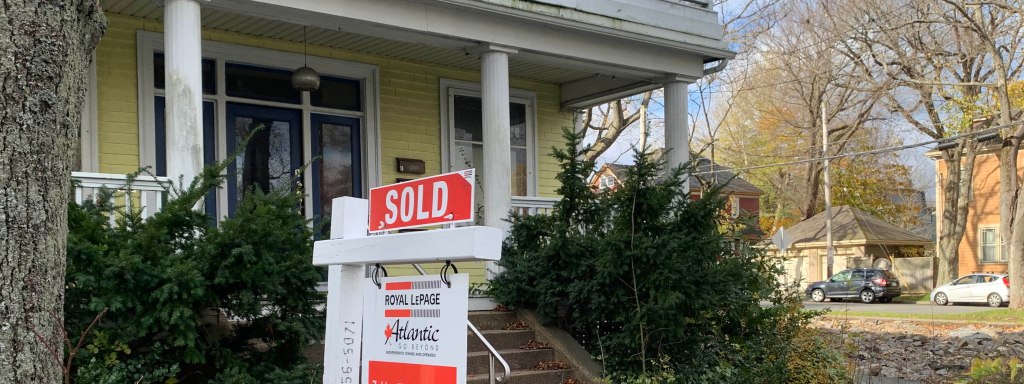
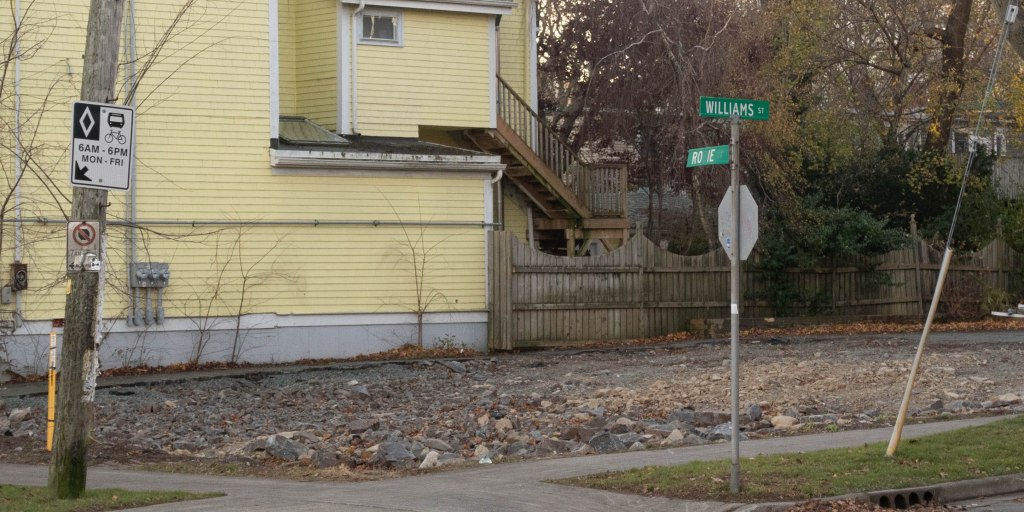
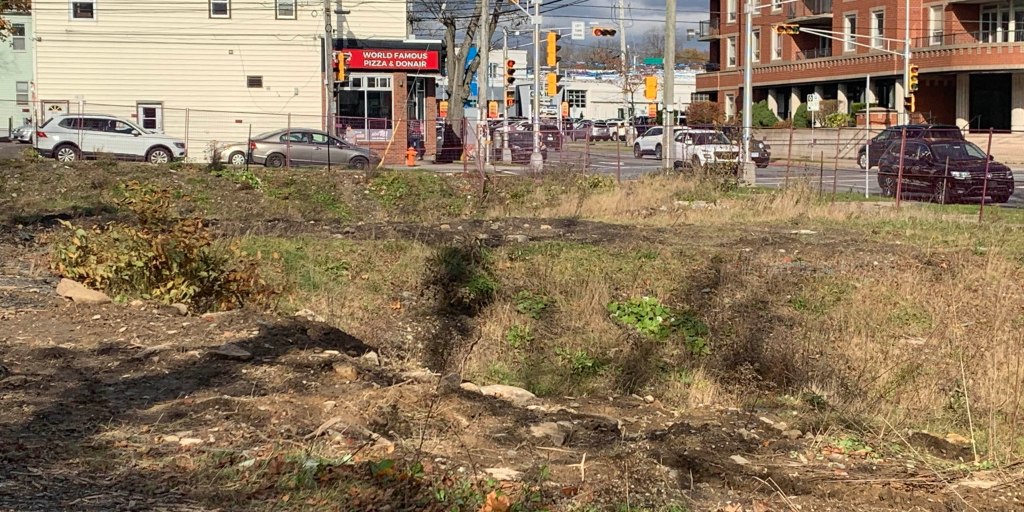
What could go wrong? The first part of the strategy fell in place on cue. With interest rates at rock bottom, developers moved quickly to buy up property along corridors like Robie and Barrington. Eight-story-or-more rental and condo accommodation soon would replace old two-or-three-story houses, many now showing their signs of wear.
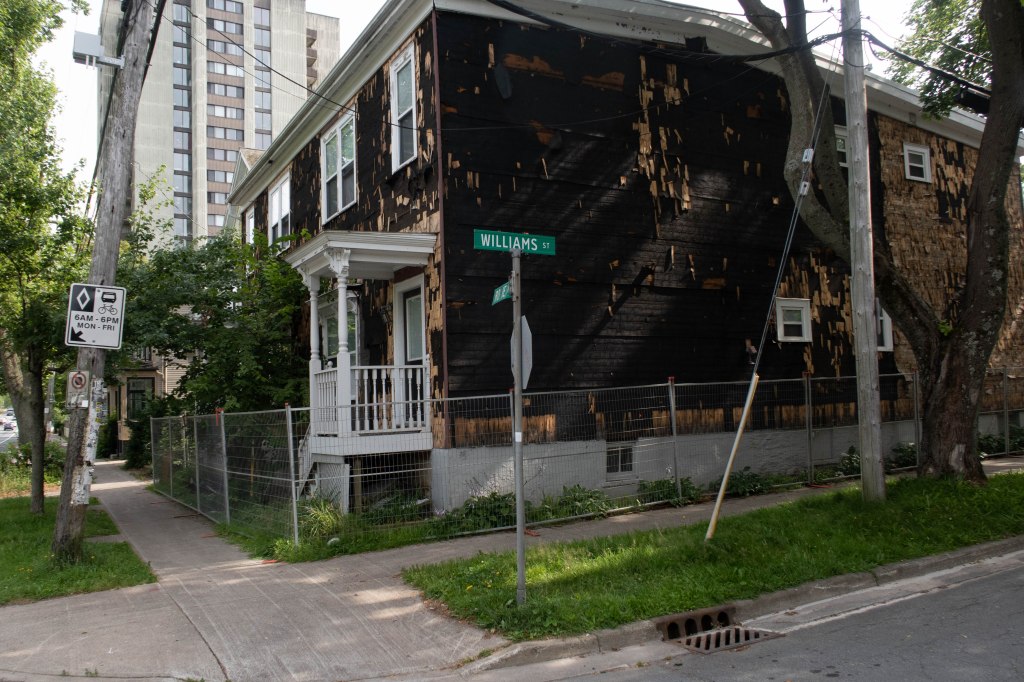
A century or more ago, those dwellings were built for big families. Today they provide apartments and rooms for students, couples or small families starting out in life, and those in their later years. The new owners, for the most part, are not interested in serving as landlords or ladies to this population nor are they prepared to invest in repairs or upgrades. The temptation instead is to abandon any pretence of maintenance and, frankly, to let the buildings become uninhabitable.
Maybe HRM didn’t think about this when it drew up the Centre Plan. Maybe it just assumed the developers would do their developer thing and proceed as soon as possible with new construction. Maybe that is why it provides them with an incentive to get on with things quickly by granting a substantial reduction in property tax for sites cleared of the existing structures.
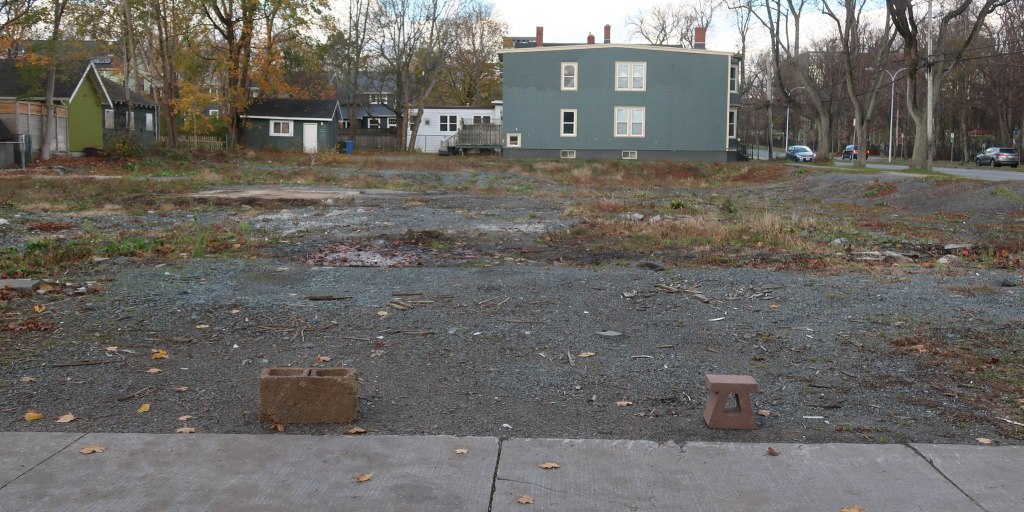
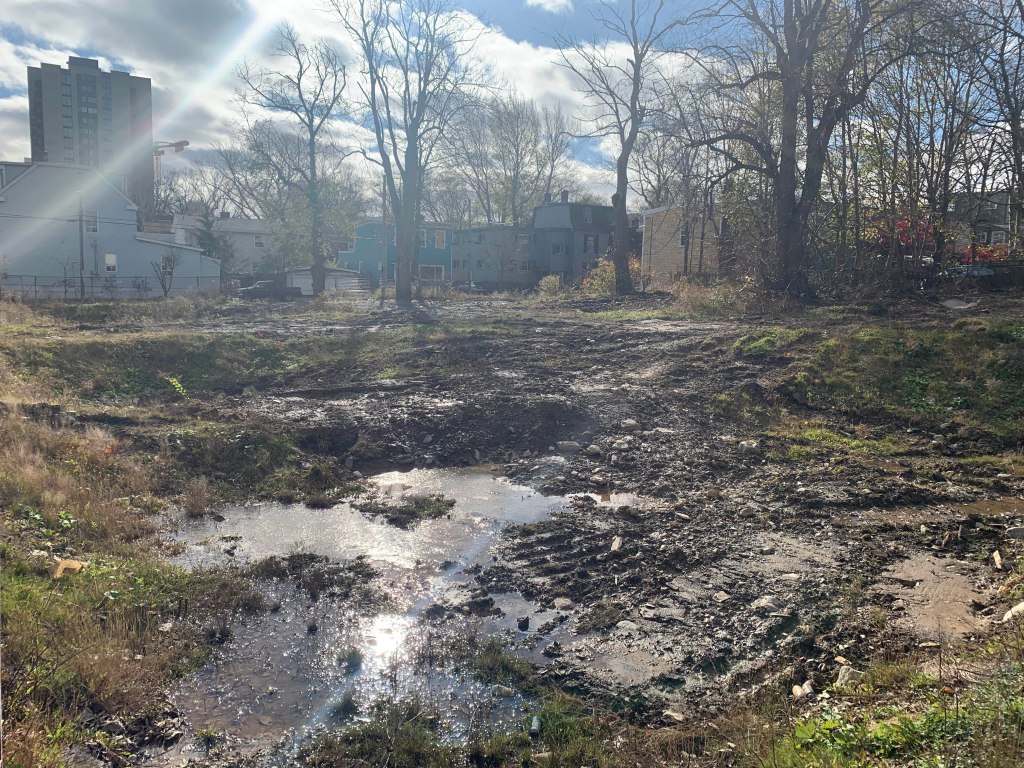
Whatever the thought process – or lack thereof – the result has been an absolute reduction in affordable housing on peninsular Halifax at a time of increasing homelessness. High interests rates and a shortage of skilled labour mean it may be years before any new construction occurs on the growing number of vacant sites in areas close to universities and hospitals. Just where students and hospital workers can afford to live these days appears not to have been part of HRM’s focus on the future.
If there’s a straight line in all this is slants down to the right.
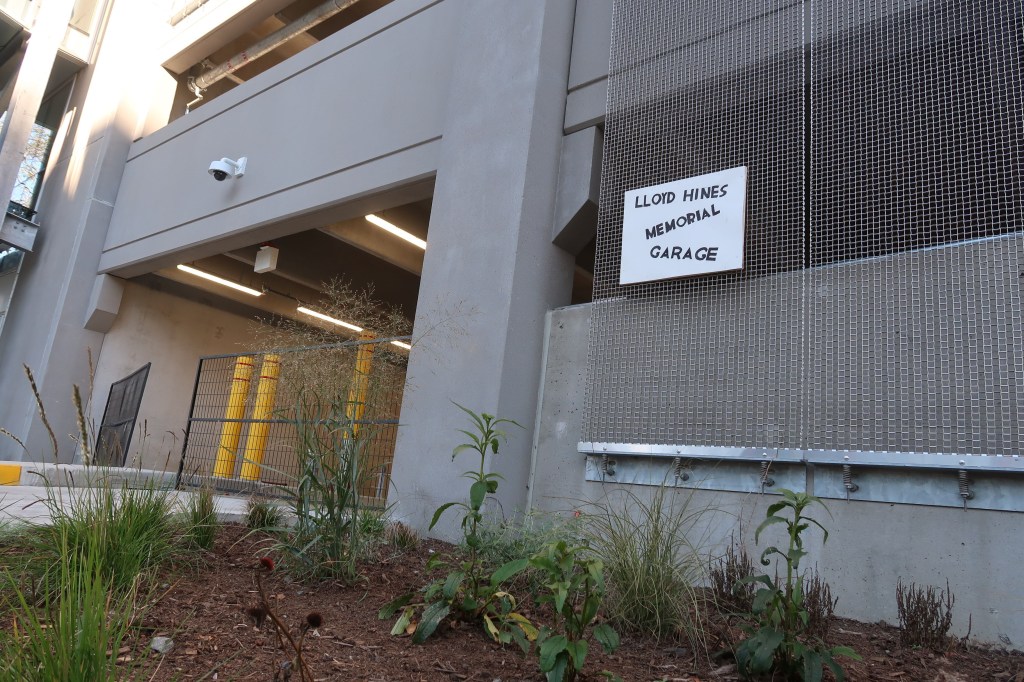
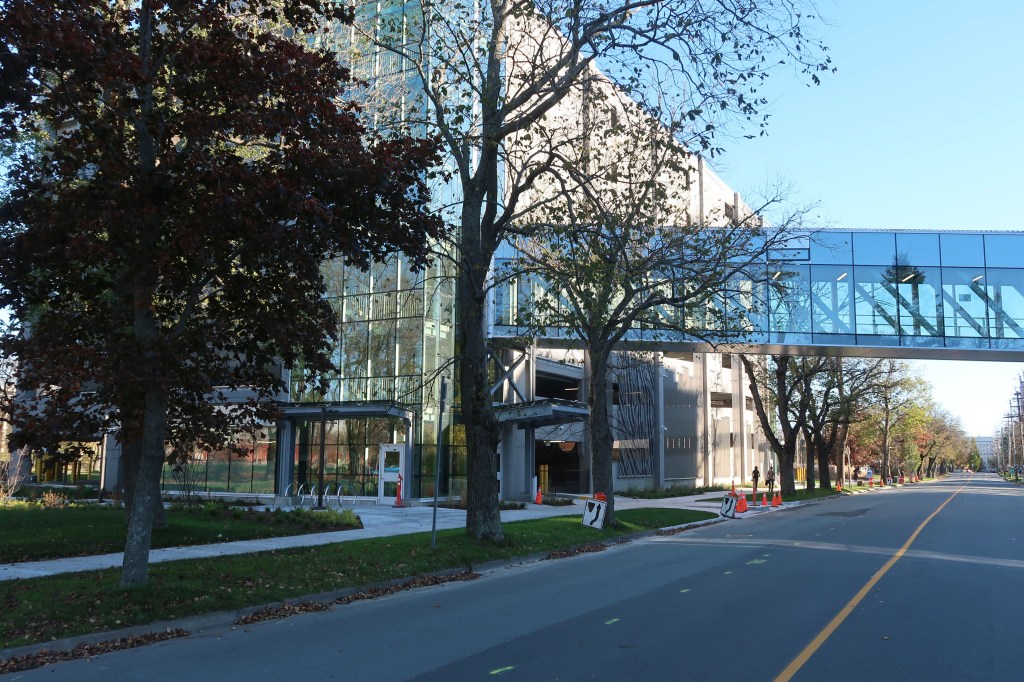
Where does the straight line to a massive $2.5-billion regional medical health facility begin? Why, with the parking garage of course!
And where to put it? Why on one of the last bits of the shrinking green space in central Halifax, next to the Natural History Museum and the Bengal Lancers’ stable .
That was clear to the Honorable Lloyd Hines, the Minister of Transportation and Infrastructure Renewal from 2017-19 in the provincial government of Premier Stephen McNeil. Before election to the provincial Legislature he was the warden of Guysborough county , known for “indulgent” and “opportunistic” use of his corporate credit card when hosting potential investors in northeastern Nova Scotia.
It would not be right to say of Hines that he dreamed up the Halifax infirmary expansion project all by himself. It was part of the provincial medical establishment’s plan to tear-down aging hospital facilities and to rebuild and enlarge others on a central medical campus to be known as the QEII Health Sciences Centre.
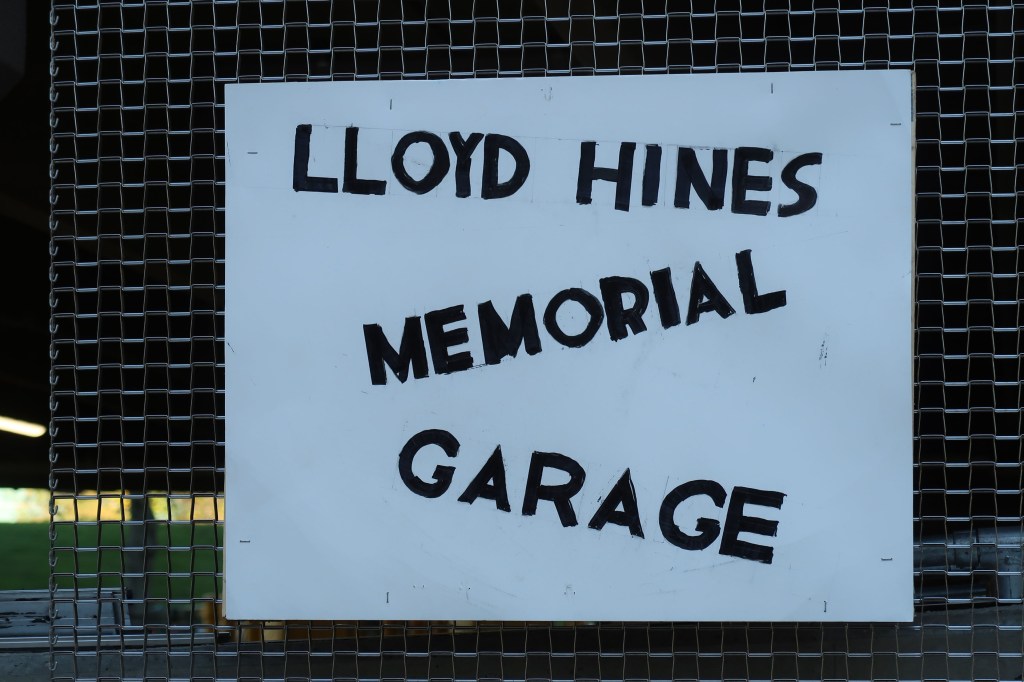
A small part of the plan was a 900-car parking garage to replace the present one that would go to make way for hospital expansion. At around $30 million, it represented just over one per cent of the total planned spending. When Hines announced it in 2019 he described it as “mundane” but also “vitally important” to the rest of the project.
Sadly, perhaps, the future of the QE2 project is now uncertain. It seems no contractor is prepared to take it on for the current budgeted expenditure. Maybe later, when the economy is more predictable, when more construction workers are available, when other smaller projects are completed then . . . maybe.
Hines, though, did his part. He nobly, stubbornly pushed for the new garage in face of widespread opposition to further loss of park land in peninsular Halifax. For that surely the building should memorialize his name.
What the James Webb Space Telescope has to say about us
The News in the first months of 2022 tracked along sharply divergent arcs. One traced the ominous curve of stories that would lead to war in Ukraine. Following under its shadow were reports of famine in Afghanistan, Ethiopia and Yemen, repression in the Middle East, continuing pandemic distress. In Canada, the “truckers’ convoy” invaded Ottawa, blocked border crossings and aroused more acute division than the confederation had experienced in decades.
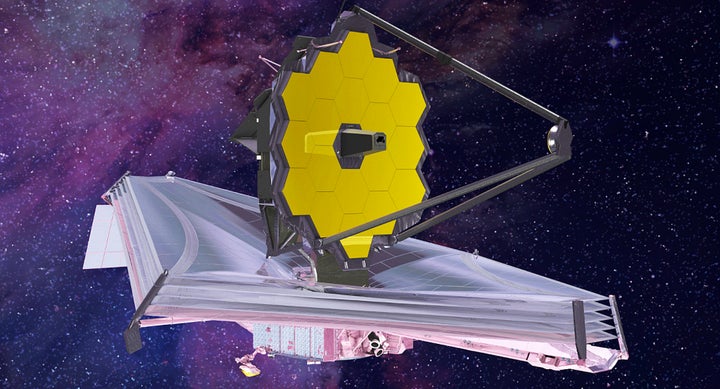
Arching up and away from this grim disorder was the flight of the James Webb Space Telescope. Launched on Christmas morning, the JWST soared through the early weeks of January, with short updates about its progress, to a location a million-and-a-half km beyond Earth. Once in place on a line from the globe it then moved with us in synchronous orbit around the Sun. Astronomers were ecstatic as they waited for the telescope’s eighteen gold-coated mirrors to cool towards absolute zero. With them in alignment we would be able to look for the first light from the dawn of the universe.
An observer from another planet might be forgiven for asking if the same animal was the source and recipient of both sets of news. War stories tells of fear, force, death and privation. Offset with moments of heroism, they reveal an immense tableau of human suffering and terror. They also change the framework in which other stories are told, stories in which such issues as climate change are claimed to be no longer so urgent as the revival of oil and coal production.
How much more appealing – before it dropped almost from sight – was the story of the Space Telescope. How much better we appeared to ourselves! It was us in the childhood of our species, as we first gazed up in wonder. And when we as shepherds lay back on hillsides and made up stories about the stars. And as temple astronomers in Mesopotamia, charting the movement of the planets and as astrologers in China and India advising our rulers of what the stars foretold. The heavens declared the glory of God to our psalmists. The Wise Men were led by a star.
This year the JWST is us, our surrogate at the climax of a history that goes back to the invention of the telescope in the earliest days of the Scientific Revolution. Since then, what other technology has had more impact on the way we understand the world? In all previous millennia, humans knew of the universe only what the naked eye could tell. The ancients distinguished between the stars and the planets and developed elaborate theories to explain the procession of the five they could identify. Then, for more than a thousand years, Ptolemy’s ingenious model of heavenly bodies on wheels within wheels sustained the religious teaching that Earth is the centre of the universe. Copernicus was the thinker who placed the Sun at the centre but it was the telescopes of Galileo, Kepler and Newton that supported his theory in the century after his death in 1543.
Galileo remains a leading hero in the story. His contributions to the study of physics assured him a revered place in the history of science but it was the discoveries he made with his telescopes that landed him before the Inquisition and ended with his detention in his last years. For Galileo,
his observation of the moons of Jupiter argued for Copernican theory. For the Church, this was a challenge it could not ignore. Its subsequent ecclesiastical climbdown was spread over the next three-and-a-half centuries. In 1742, almost a century after Galileo’s death, the Vatican authorized publication of his scientific writing. In 1939, Pope Pius XII described him as an “audacious hero”. In 1992, Pope John Paul 2 stated that the Church had erred in holding him “suspect of heresy”.
The Church might have identified the telescope as a more serious threat to the authority of the scriptures but by then a ban would not have been possible. The use of lenses and mirrors went back at least to Archimedes and lens-grinding for eyeglasses was an established technology in both Italy and the Netherlands where the telescope was invented. In fact, priests were actively involved in its on-going development. Newton is recognized as the inventor of the reflecting telescope that uses a mirror rather than a lens to capture and focus the light from stars but two priests – Bonaventura Cavaliere and Niccolo Zucchi –are credited with significant contributions to the design.[i] One measure of interest in astronomy within the church is that thirty-five lunar craters are named after Catholic priests.[ii]
So with telescopes, we awoke to the night skies as from a dream. In the two centuries that followed Galileo, astronomers discovered Uranus (William Herschel, 1781) and Neptune (Johann Gottfried Galle and Urbain Le Verrier, 1846). Beyond our solar system telescopes showed us galaxies, star clusters and nebulae. With the invention of photography in the 19th century, close-up images of the moon and the rings of Saturn could be shared with an increasingly attentive public. Observatories invited school-children to visit and boasted about the latest discoveries by their ever-larger mirrors. In 1920, the biggest mirror – a hundred inches in diameter – was at Mount Wilson in California where Edwin Hubble would observe galaxies expanding ever faster and farther apart. From this, he and other astronomers would deduct that the universe began with a Big Bang. As recently as two decades ago, Mount Palomar, also in California and with an even bigger mirror, captured headlines with the discovery of Sedna, a dwarf planet that takes 11,400 Earth-years to orbit the sun.
As the science progressed, the best places to set up a new telescope were found at much higher altitudes and in more remote locations, deserts in Chile or mountains in Hawaii with clearer air and less light pollution from urban centers. Discoveries continued but the more we learned, the more the limits of earthbound astronomy also became apparent. Life on earth is possible because the atmosphere shields us from intense radiation present in the universe but it also reduces the clarity of the light we receive. What’s more, the infrared wavelengths to which light is stretched as it travels vast distances across the universe are invisible to eyes evolved on earth alone. Nor could light from the stars tell the whole story. After Marconi, experimenters in the new field of radio transmission recorded static coming from no place on earth but rather from objects far distant in the Milky Way.[iii] Around 1960 the construction in Puerto Rico of the Arecibo radio telescope with a 305-meter spherical reflector helped to establish the existence of neutron stars and the discovery of the first planets beyond our solar system. In Canada, a much different sort of observatory – two kilometers down a Sudbury nickel mine – was the site for study of the transmission of neutrino particles radiating from the sun. That research won the Nobel Prize in Physics for Canadian physicist Arthur McDonald and Takaaki Kajita of Japan in 2015.
Telescopes truly have come into their own on platforms in space. Early in the Space Age, the race to the moon grabbed most attention as a politically-driven competition between super-powers. When U.S. President Dwight Eisenhower established the National Aeronautics and Space Administration – NASA – it was in reaction to the Soviet Union’s being first with a Sputnik satellite in earth orbit. A half-century later, the moon mission can appear a bit like a sidebar to the story of a much bigger quest, our inquiry into the nature and origins of the universe. Landing men on the moon and returning them safely was the priority assigned to James Webb when he became the second director of NASA in 1962. But in his six-year tenure Webb also advanced the Mariner space program’s reach to Mars, Venus and other planets and to stars beyond. By the time of his departure in 1968, just months before the first moon landing, NASA could count more than seventy-five space-science missions.
The moon today still attracts world powers and bored billionaires but public support for space exploration depends largely on its appeal to our curiosity. In this, the Hubble telescope has had an essential role – one which at first it was feared to have failed. Launched in 1990, the Hubble’s position in low-earth orbit was declared to be the “ultimate mountaintop” but tiny flaws in its large mirror, more than two meters wide, meant the first images were badly blurred. Technicians sent up from the space station were able to fix the problem and the Hubble has gone on to transmit a stream of images[1] reproduced in countless posts and publications. Who with any access to the internet has not seen the spinning galaxies, the towering pillars of space dust, the births of stars and dying red giants?
The Hubble’s long life has been lucky for NASA. The plans for the “Next Generation Space Telescope” were first announced in 1996 when it was to be in position by 2007 at a cost of half a billion dollars. By 2002, the cost estimate for the telescope – now officially named after James Webb – had risen to $2.5 billion to be shared with international partners including the European and Canadian space agencies. A launch date was set for 2011 and a full-scale model of the telescope was on display at the Smithsonian Institute in Washington. By 2011 the Webb was seven years behind schedule and billions more over budget. The science journal Nature described it as the “telescope that ate astronomy”[iv] and the US House of Representatives was in revolt. It took an alliance of the American Astronomical Society, the international science community and key US senators to re-set the project with a 2018 launch date and price of almost nine billion dollars.
A kind of obsessive intensity built around the project as it progressed towards a count-down. Once in space, a million miles from Earth, if anything went wrong there could be no repair-and-replace missions as with the Hubble. While the engineers tested and retested every last part and function of the telescope, the astronomers looking over their shoulders worried about the consequences of a failure. Scientists polled in a New York Times survey shortly before the launch spoke of feelings of “excitement and terror . . . The next decade of astronomy and astrophysics is predicated on J.W. being successful . . . Any failure of JWST would be disastrous for NASA . . .”
More measured was the historical perspective of an astrophysicist at Yale, Priyamvada Natarajan: “Remarkable enduring achievements of human hand and mind, be it the temples of Mahabalipuram, the pyramids of Giza, the Great Wall or the Sistine Chapel have all taken time and expense. I truly see JWST as one such monument of our times.”[v]
The JWST went up flawlessly aboard a European space agency Ariane rocket but hundreds of tests and adjustments would be needed before it could even begin to live up to expectations. In February, the ground-control team at the Space Telescope Science Institute in Baltimore began a painstakingly-slow alignment of the eighteen golden mirrors to focus on a single star. While that has gone on, NASA mixes online messages of extraordinary sights to come with quick lessons in basic astronomy. An animated video shows the Webb located at Lagrange 2*, one of five points in space where Earth’s gravity can offset the pull of the Sun and an object can “stay put” in relation to the planet[vi]. Also we’re told the Webb carries four different viewing instruments to capture infrared light because wavelengths differ depending on how far they have travelled. With them – the Canadian space agency has contributed one – the Webb will be able to see through the space dust that now hides many distant galaxies. Another note explains how the telescope must keep its back to the Sun. An enormous sun-shield protects it from heat and from the light that literally would blind it.
We’ll get to see the first images from the Webb likely by mid-year. Expect them to be stunning and attention-grabbing, payback to the public for the political support and patience that saw the project through so many delays and budget multiples. Astronomers will focus on the science to follow. One priority is to study the atmospheres of exo-planets orbiting other stars and to identify any that might be able to support life. Another will be to look more deeply than ever into the creation and structure of distant galaxies and seek evidence of the dark matter and dark energybelieved to account for most of the mass of the universe. The deepest scan will be for some trace of the very first stars to have escaped the dense nucleus of the early universe, a search for star light that has travelled more than thirteen billion years from the beginning of Time.[vii]
To paraphrase Neil Armstrong, that would be a big step for humankind, at least until we remember how immense the universe and how short our span. Discoveries by the Webb will be historic and will excite peoples’ imagination and determination to know more. But we might ask what has any of this to do with our pushy aggressive actions back here on Planet Earth? Even as NASA was reporting that all eighteen Webb mirrors were now turned to star HD 84406, members of NATO were recalling their diplomats from Ukraine. Soon, their warnings of a Russian invasion would be all too accurate. Science may invite our attention to the origins of the universe but our endless territorialism and struggles for dominance leave us with little time. As in Buddhist teaching, we are like children in a burning house.
Science has been hard on the idea of a moral authority vested in some heavenly power but we can’t blame Copernicus or Galileo for failures of belief in right and wrong. Our record of violence and betrayal well pre-dates the first sightings of the moons of Jupiter. Up and down have long been embedded in religious discourse with up always the preferred direction for souls to ascend and gods to preside. Take away stars and planets and comets as ultimate places of residence and a lot of ancient mythology loses its dynamic. That has been an issue for poets and theologians but mainstream opinion adjusts and moves on. If the James Webb telescope finds no evidence of a caring creator in its reading of first light this will be unlikely to shake any faith. Yet that is not to say the venture is of no spiritual significance. Along with all other expectations, discoveries by the Webb will serve as a reminder of our extraordinary place in the universe either as members of an intergalactic community or as sole witnesses to its grandeur. It also will present us with a challenge: to find embedded in our humanity that sense of destiny with which the cells that formed in the water of our cooling planet came together and evolved to form conscious life.
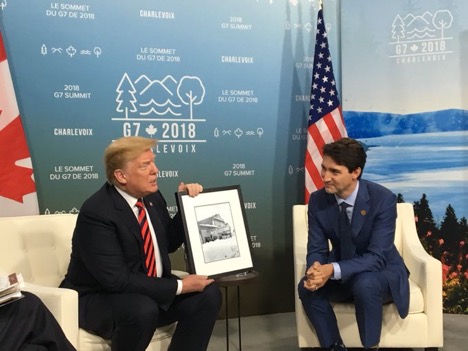
June 2018: Prime Minister Justin Trudeau appeared to attempt a lighthearted moment at the G-7 Summit on Friday when he presented President Donald Trump with a framed photograph of a Canadian hotel and brothel once owned by Trump’s grandfather
The Artic Restaurant and Hotel, opened by Friedrich Trump in 1897, was one of the first properties in what would become the family’s real estate empire. Trump has denied the hotel, which opened during the Klondike Gold Rush, was ever operated as a brothel.
Apparently, Trump didn’t like the joke. Some rude exchanges followed between Ottawa and Washington. Which is to say that you could take the hypotenuse for a fun ride at his expense but by the time he worked out the other two sides he did not find it funny.
 Seeking The Hypotenuse